

Vintage chronographs
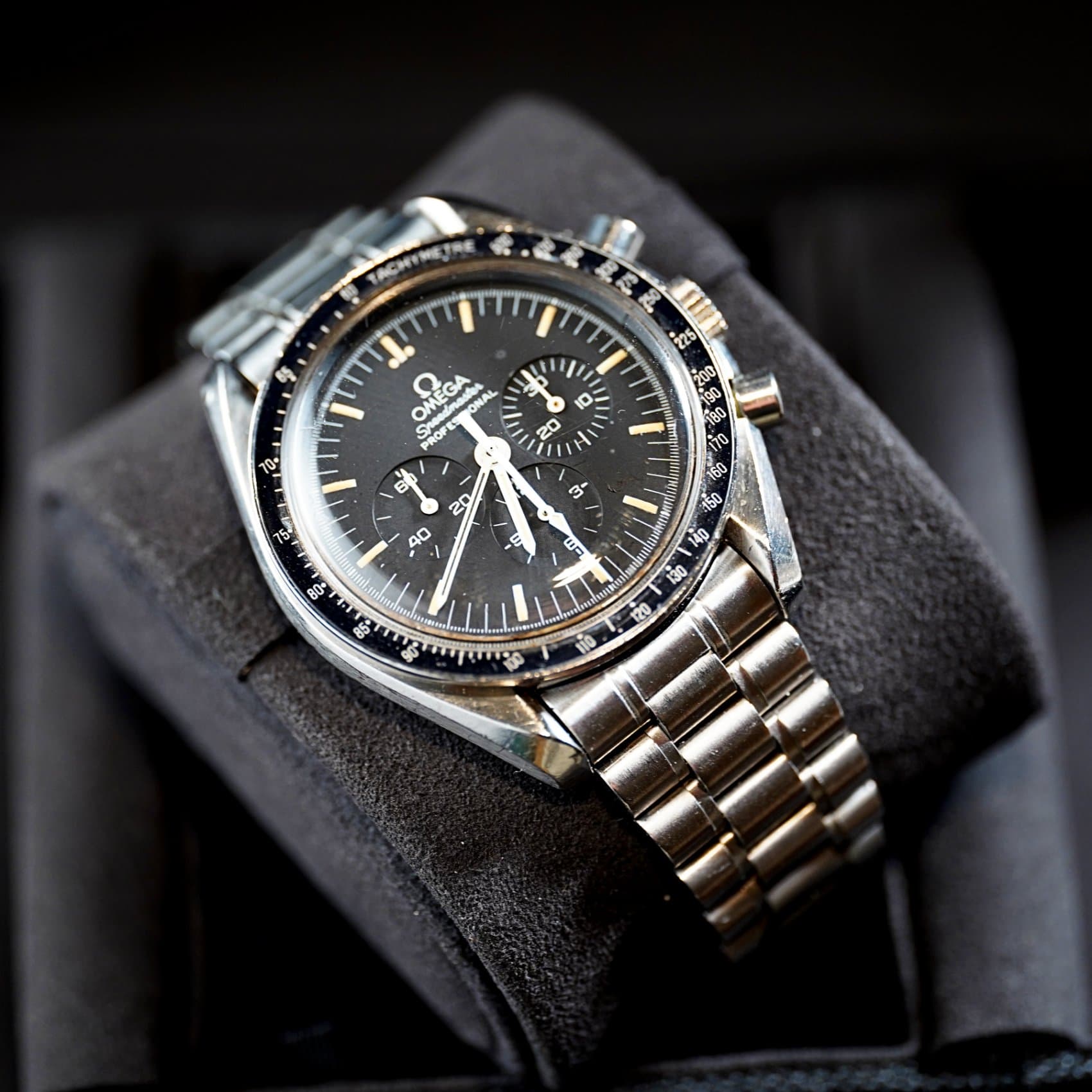
A chronograph is the most complicated thing most vintage collectors will own: a second movement on top of the first, with more parts to wear and more to get wrong. The Omega Speedmaster, the Heuer Autavia and the triple-calendar chronographs of the 1940s and 1950s all reward a careful buyer.
Each listing describes the case, dial and pushers, and says what we know about the chronograph and its service history.
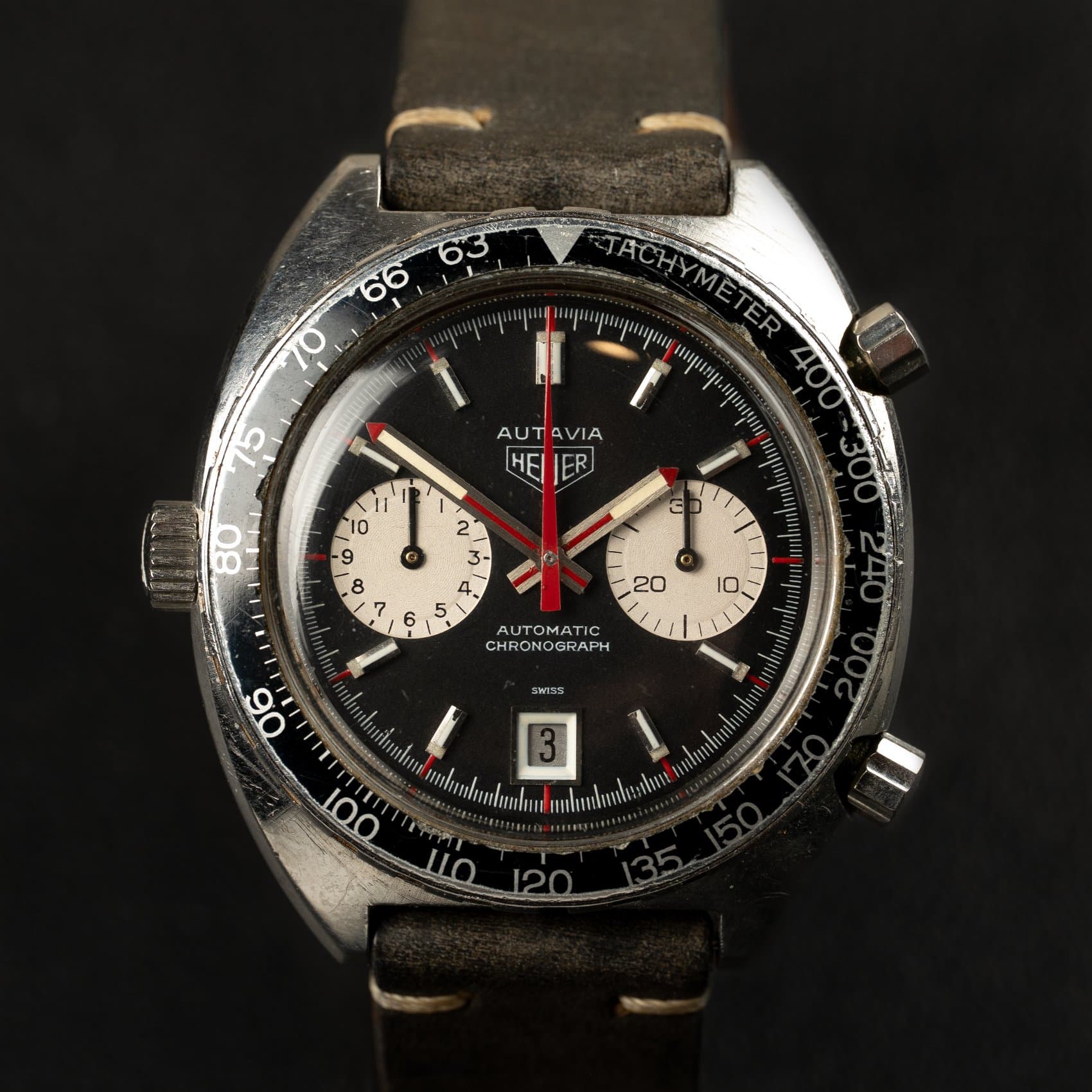
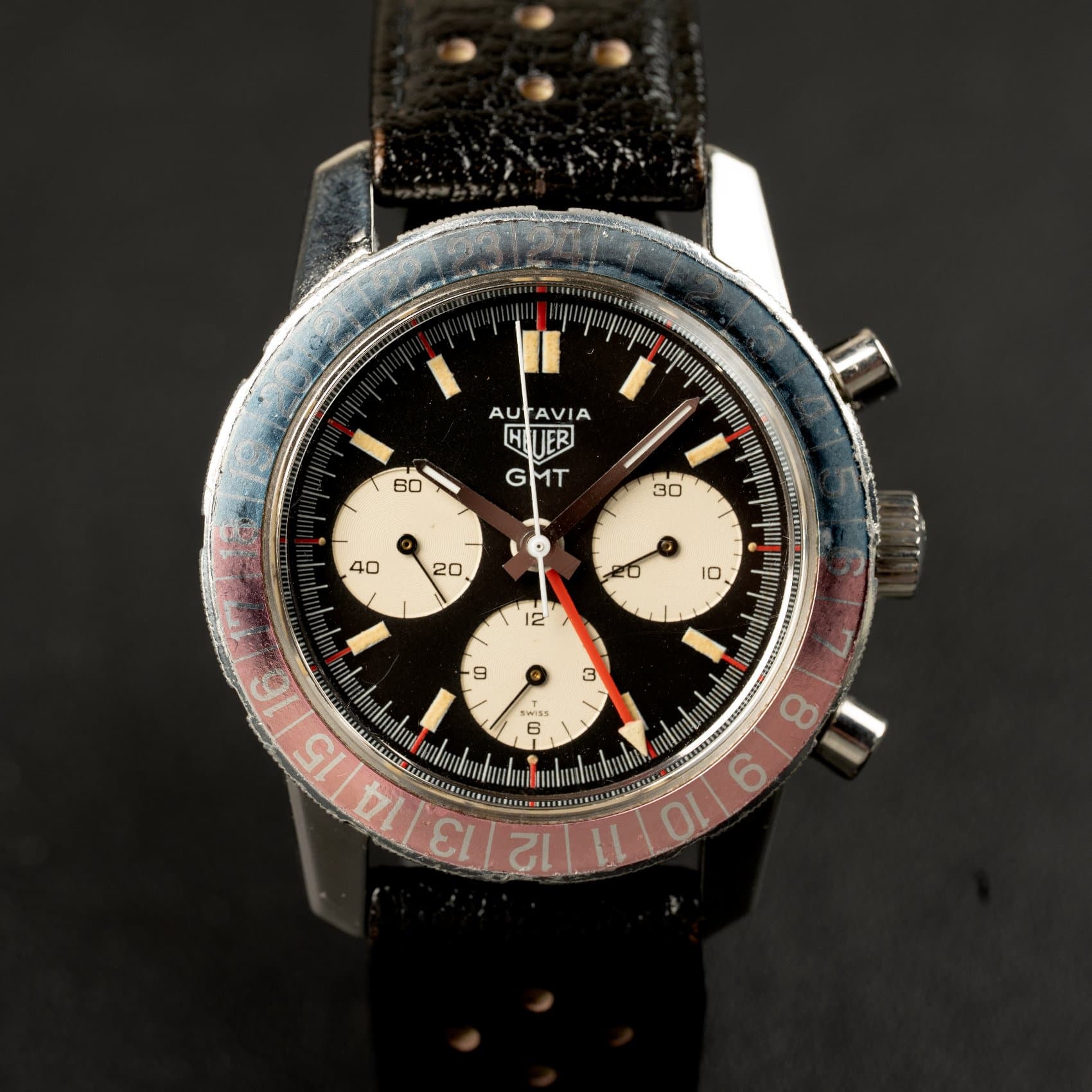
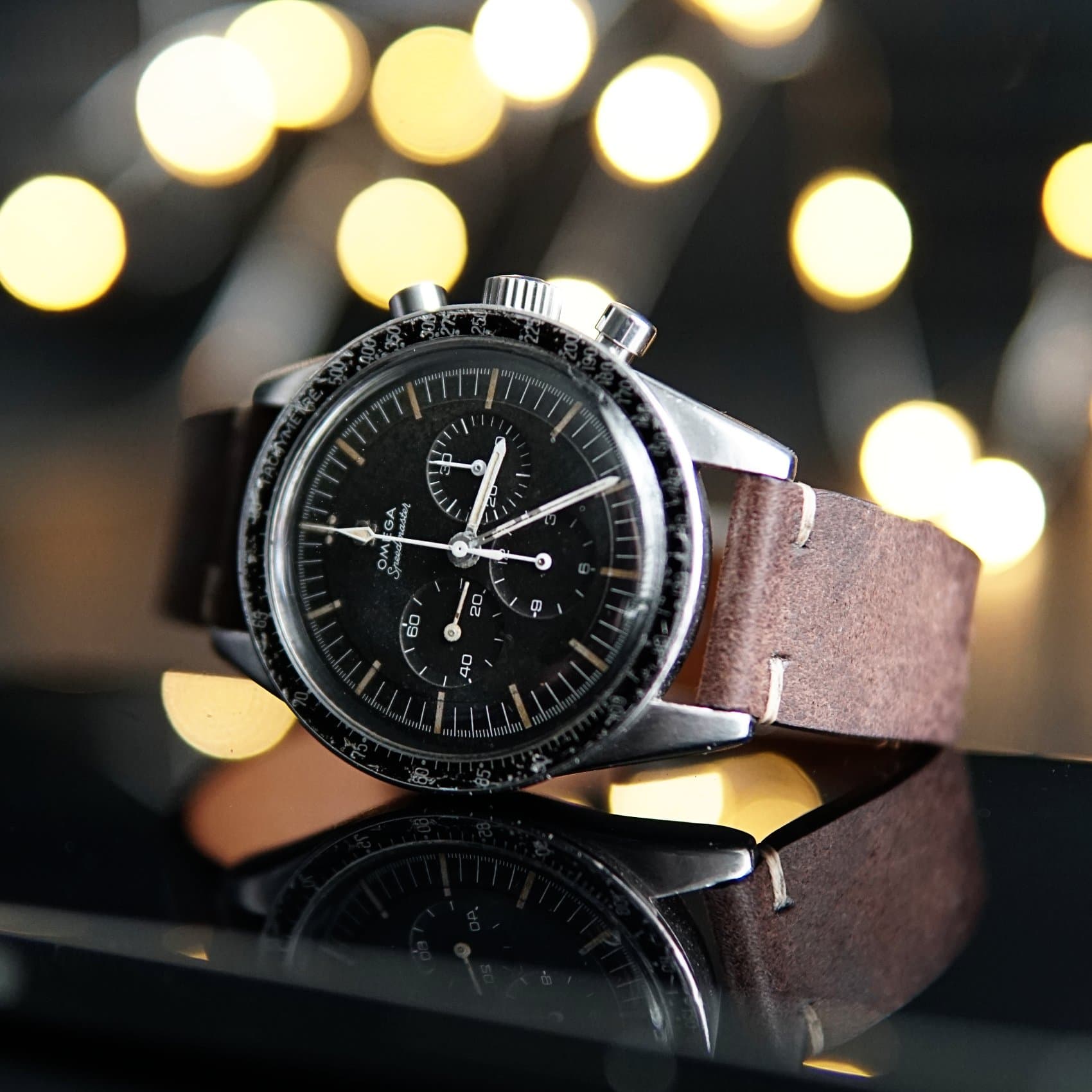
What decides the value is mostly the dial and the bezel. On a Speedmaster, the step dial, the bezel insert and the caseback tell you the reference and the period. On an Autavia, the dial execution and the bezel insert do the same job. Original subdial hands and correct pushers matter more than most buyers expect, because they are among the first parts replaced in a service.
A chronograph should start, stop and reset cleanly, the seconds hand should return to exactly zero, and the minute counter should jump when it should. We test each of those before a watch is listed, and say what we found.
Available now
Sold: the record
Sold pieces stay up so you can see what we have had and what it sold for.
Ask us to find one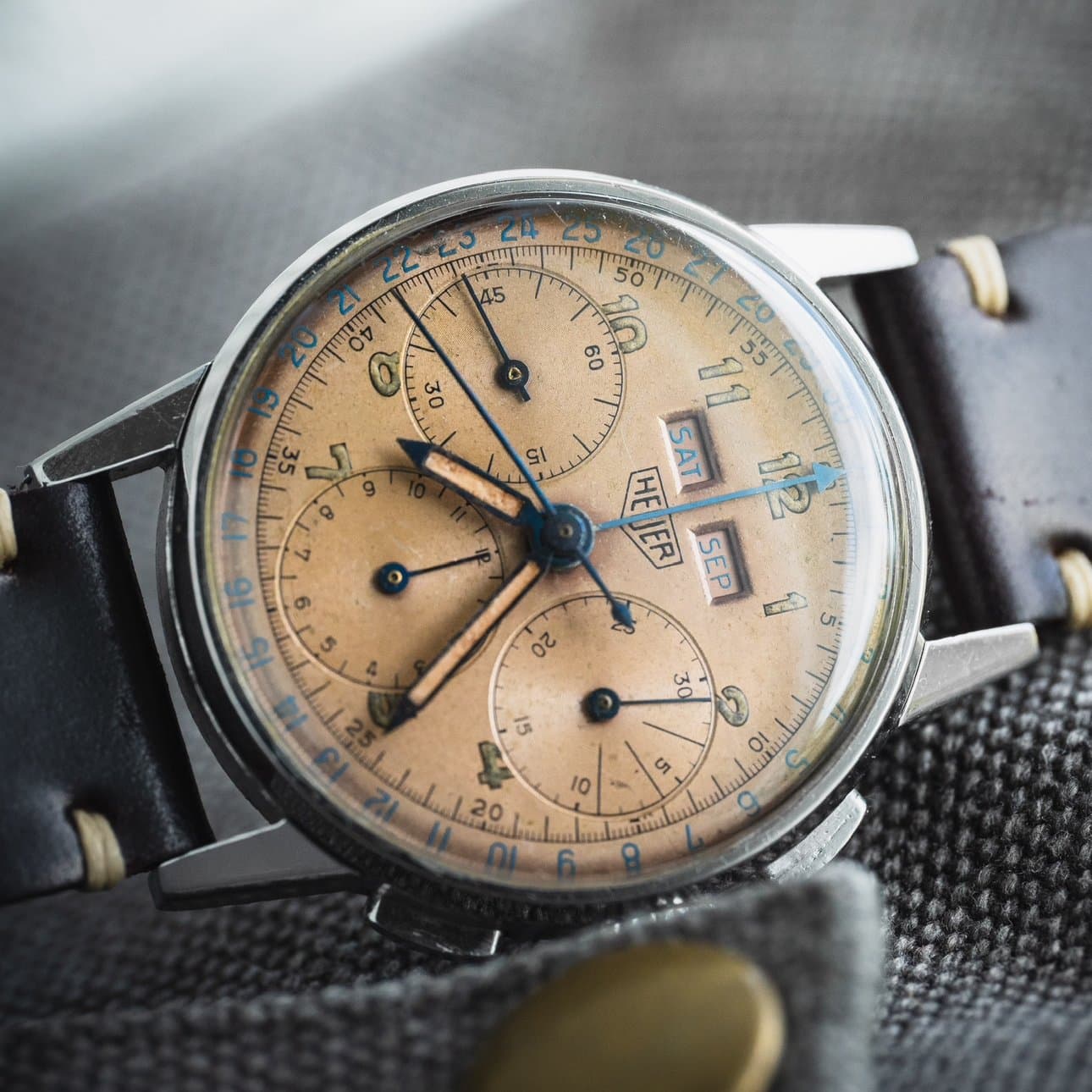
Questions
What should I check on a vintage chronograph?
That it starts, stops and resets cleanly; that the hands return to zero; that the pushers are correct for the reference; and when it was last serviced. Every listing tells you what we know, and you can always ask.
Is a Speedmaster a good first vintage chronograph?
Often, yes. They were made in large numbers, parts are available and the history is well documented, which makes a correct example easier to judge.
Can you source a specific chronograph?
Yes. Send the reference and we will look for one.
More collections
First look at new arrivals, 48 hours before they post.